


Blog
Sustainable Living: Why Your Choice of Lunch Box Matters


Lorem ipsum dolor sit amet, consectetur adipiscing elit. Ut elit tellus, luctus nec ullamcorper mattis, pulvinar dapibus leo.
Sustainable Living: Why Your Choice of Lunch Box Matters
Sustainability is no longer just a trend — it’s a global priority. From the way we commute to the products we buy and the food we consume, modern living has shifted toward reducing waste and minimizing environmental impact. Yet one area that often goes overlooked is how we transport and store our meals. The type of lunch box you choose may seem insignificant, but when multiplied across a lifetime of lunches, snacks, and meal prep sessions, the impact becomes substantial.
The Hidden Cost of Disposable Containers
Single-use convenience items such as plastic bags, cling wrap, and disposable meal containers contribute significantly to landfill waste. According to environmental studies, the average student or worker who brings lunch daily can generate more than 180–250 pieces of single-use packaging per year just from wrappers, baggies, and cups. Scale that across workplaces, schools, and cities, and the volume becomes staggering.
Disposable containers also degrade unevenly. Plastics, for example, can take hundreds of years to decompose and release microplastics as they break down. These particles enter oceans, soil, and food systems, creating long-term environmental and health concerns.
Lunch Boxes as a Micro-Shift in Sustainable Behavior
Sustainable living doesn’t have to start with huge sacrifices. In fact, the most effective environmental changes often come from micro-shifts in daily behavior. A durable lunch box transforms meal transport from a waste-generating habit into a reusable system.
A sustainable lunch solution ideally offers:
Long-term durability
Food-safe materials
Reusability
Repairability or replaceable components
Compatibility with bulk meal prep
The simple act of replacing disposable containers with a high-quality bento box system reduces waste while promoting healthier eating and better portion control.
Material Matters: The Case for Stainless Steel
Not all reusable lunch boxes are created equal. While many people upgrade from disposable plastics to reusable plastic boxes, these still degrade over time, scratch, stain, and retain odors. Stainless steel presents a material advantage in sustainable living:
Long product lifespan
Fully recyclable at end-of-life
Non-toxic and food-safe
Does not absorb odors
Resists staining and corrosion
A stainless steel bento tray can last for years — even decades — without losing performance. This durability reduces consumption, waste, and the need for frequent replacement.
Temperature Control and Food Freshness
Beyond sustainability, functionality matters. Lunch solutions that maintain temperature and freshness reduce food waste — a major sustainability concern on its own. Insulated bags, dip containers, and leak-proof lids ensure meals remain appealing throughout the day, decreasing the likelihood of discarded lunches.
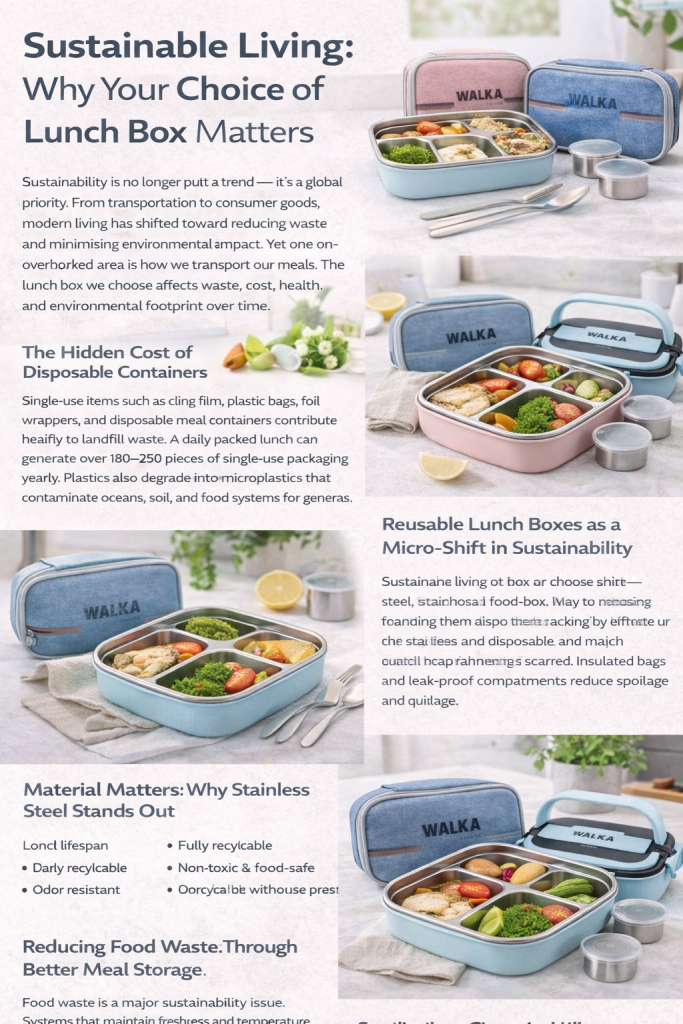
Brands such as WALKA Bento combine stainless steel trays with thermal carrying cases and utensils to create a complete reusable system. When each component is thoughtfully engineered, the environmental payoff increases.
Support for Meal Prep Culture
Meal prepping has become a powerful cultural movement — saving money, improving nutrition, and minimizing waste. A dependable lunch box accelerates that lifestyle by:
Reducing impulse takeout purchases
Improving portioning
Encouraging leftovers instead of food waste
Eliminating disposable restaurant packaging
Takeout containers, napkins, and disposable cutlery create an enormous amount of waste that can be avoided with carry-friendly lunch systems.
Aesthetics and Sustainability Go Hand in Hand
Sustainable products must not only function well — they must delight users. Modern lunch boxes emphasize both durability and aesthetics so that consumers feel motivated to reuse them consistently. Minimalist designs, natural colors, and tactile finishes make sustainable choices feel desirable rather than obligatory.
The Bigger Picture: Daily Habits That Accumulate Over Time
Sustainability isn’t achieved through perfection, but through consistency. Choosing a reusable lunch box may seem minor, yet multiplied over 10, 20, or 30 years of lunches, the ecological footprint diminishes dramatically. When millions of people make the same micro-shift, the environmental benefits become macro-scaled.
Conclusion
The lunch box you bring to work, school, or the gym is a reflection of your environmental values. By switching to reusable, durable, and recyclable materials — especially stainless steel — you embrace a more sustainable relationship with food and consumption. Small habits matter, and choosing the right lunch solution turns sustainability into a practical, daily ritual.